
This world has the ability to run us ragged. Whether it’s work, home, appointments, or trying to squeeze in the things that matter to us, breathing room often feels like a luxury we can't afford. But pausing doesn't require perfect conditions or large blocks of time. And it doesn't need to look a certain way.
I've learned that the best pauses are often imperfect, happening on a commute or at your desk in a few stolen seconds. And when you pause to notice what's happening in your body, something shifts. You move with intention instead of just reacting. You reclaim your energy.
Here are five little ways I pause when life is full.
1. Meditate on Walks + Commutes
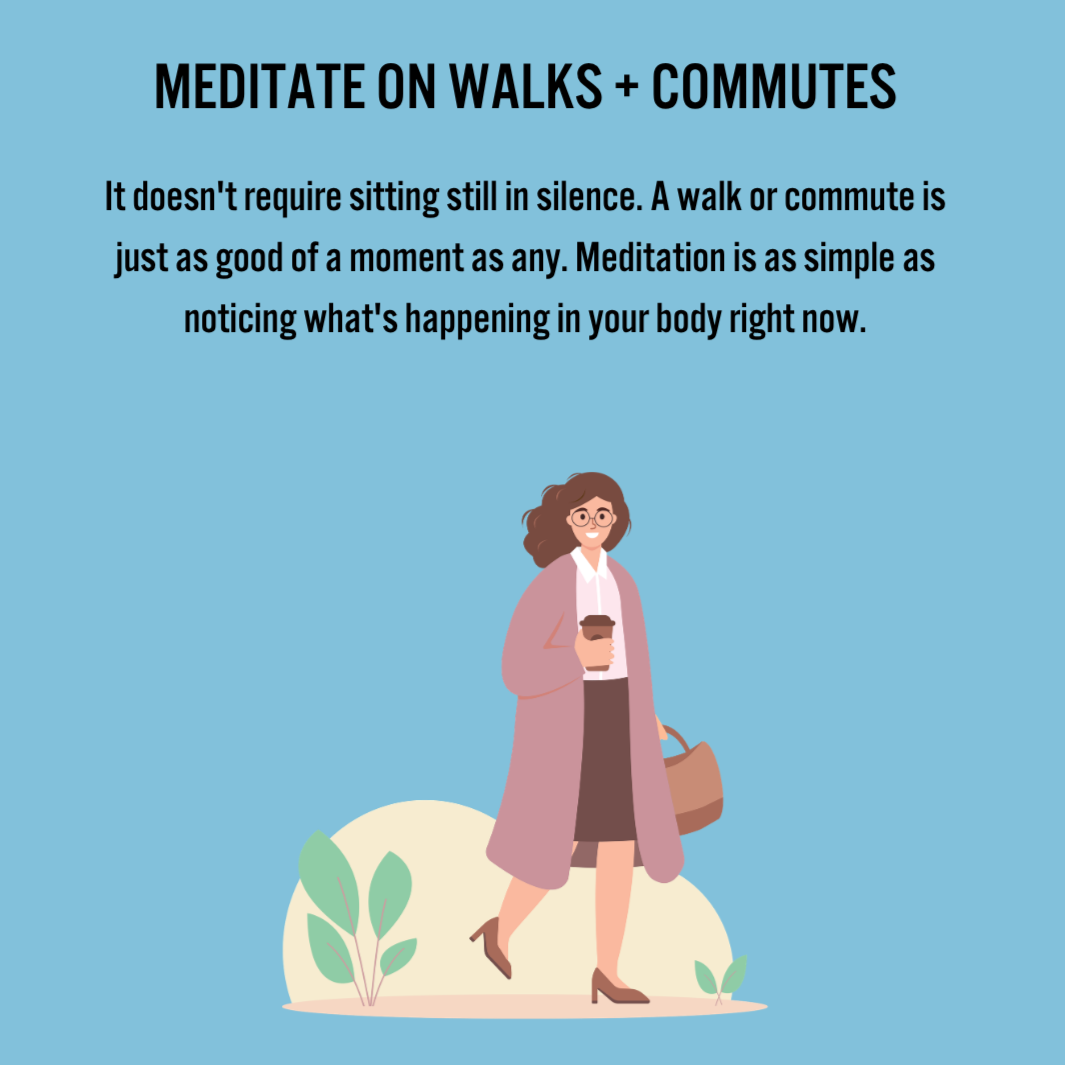
When I first began my meditation practice, it felt very traditional. Sitting still, eyes closed, in a quiet space. But I've discovered that some of my most meaningful meditations happen while I'm moving. On a walk. During a commute. Even standing on the bus. It might sound unconventional, but I've found that most people don't even notice.
Why it works: Meditation is more about directing your attention to your present body than perfection or stillness. When you're walking or commuting, you're already in motion, which can actually ease the mind into noticing what's happening in your body and breath. Movement paired with awareness creates a natural anchor for your attention.
Try this: Start with a guided walking meditation. Apps like Headspace and Peloton offer them specifically for movement. Or simply put on music you like and notice what you feel as you move, from your feet to the air around you.
2. Body Scans Throughout The Day
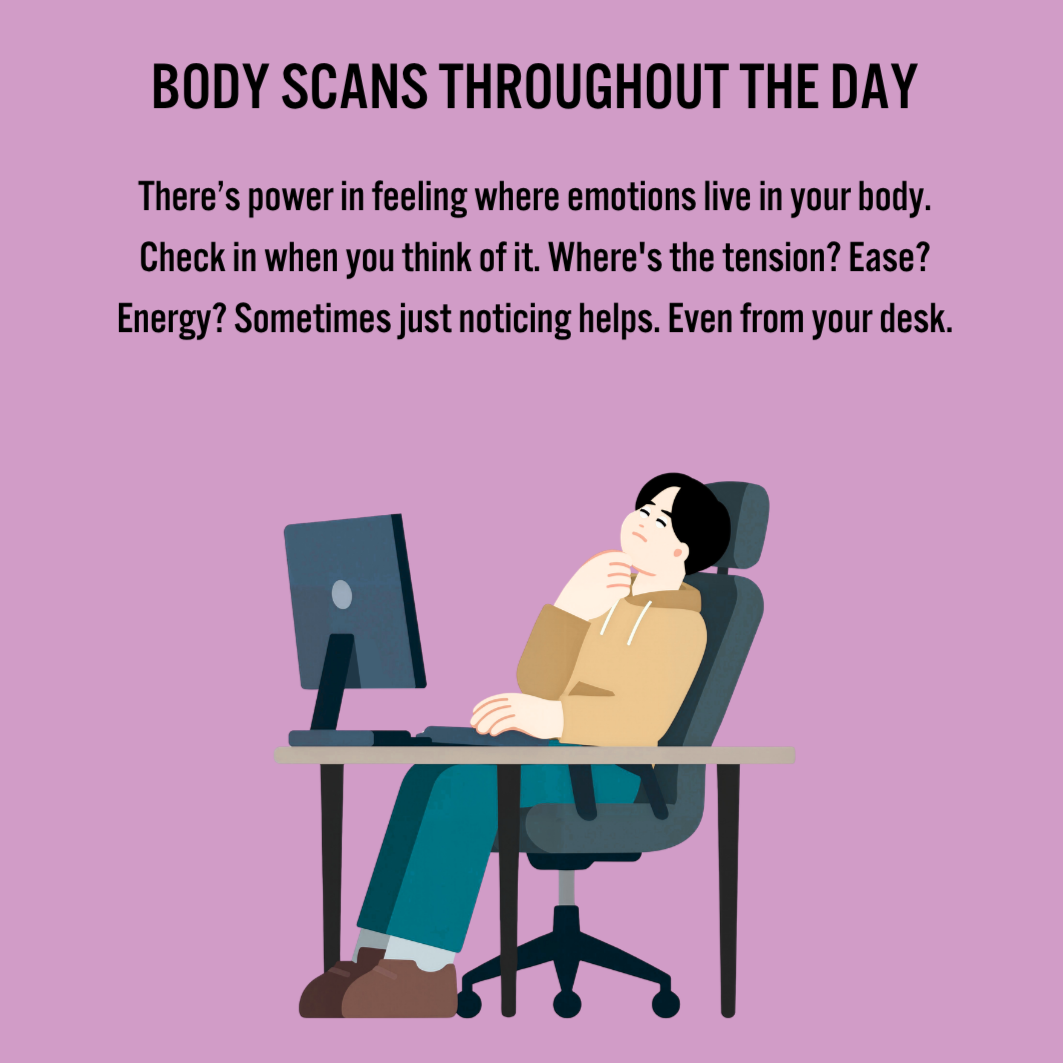
I'm honestly the body scan's biggest hype woman. This practice has helped me realize just how much my emotions and what I'm experiencing get stored in different parts of my body. I can feel exhaustion in my neck, joy in my jaw, and anxiety in my stomach. And the beauty is it can be done in as little as 30 seconds. In fact, you can do it right from your desk.
Why it works: Your body holds information. Emotions, tension, ease, and energy all live somewhere physically. When you pause to notice these sensations, you're building awareness of your internal landscape. That awareness alone can shift something. Noticing without immediately solutionizing is the goal.
Try this: Pick one body part (your neck, your shoulders, your belly) and notice how it feels. Tight? Relaxed? Achy? Just observe without judgment. That's it.
3. Shifting Spaces
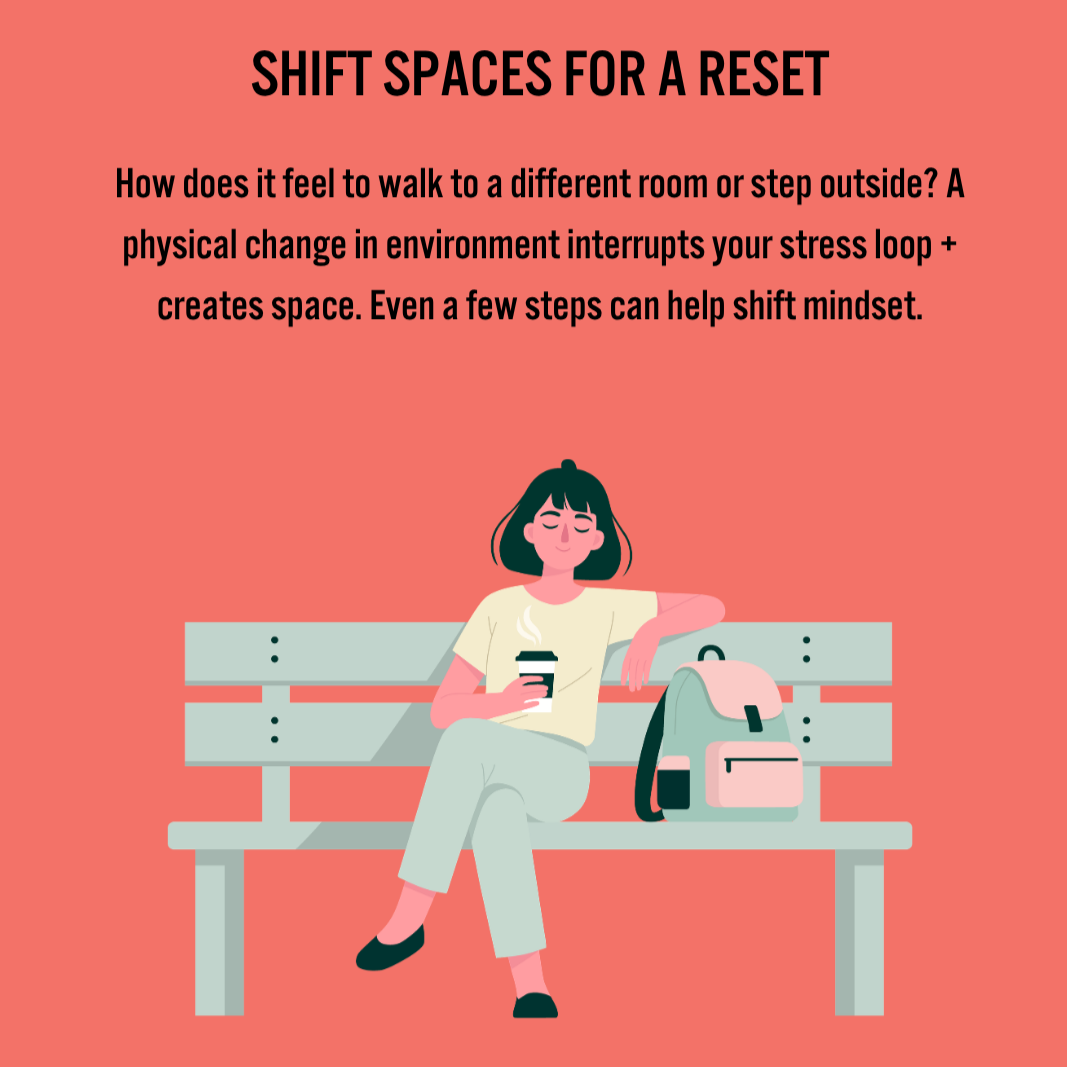
I remember working in an office building where I was rarely at my desk. I'd wander to a coffee shop or little nook not because I was avoiding work or coworkers, but because my brain needed a shift and my body wanted to be somewhere else to help my brain do what I was asking of it. The environment was wearing on me, and moving to a different room or stepping outside felt like hitting a reset button.
Why it works: Physical environment directly affects your nervous system. When you're stuck in one space feeling overwhelmed or stressed, your brain reinforces that feeling. Shifting your physical location interrupts that loop. Plus, spending time outdoors has been shown to reduce stress, lower inflammation, and help regulate neurotransmitters.
Try this: The next time you feel stuck or overwhelmed, simply walk to a different room or step outside. Spend a few minutes just being somewhere else. Notice how your mind shifts.
4. Check In With a Friend
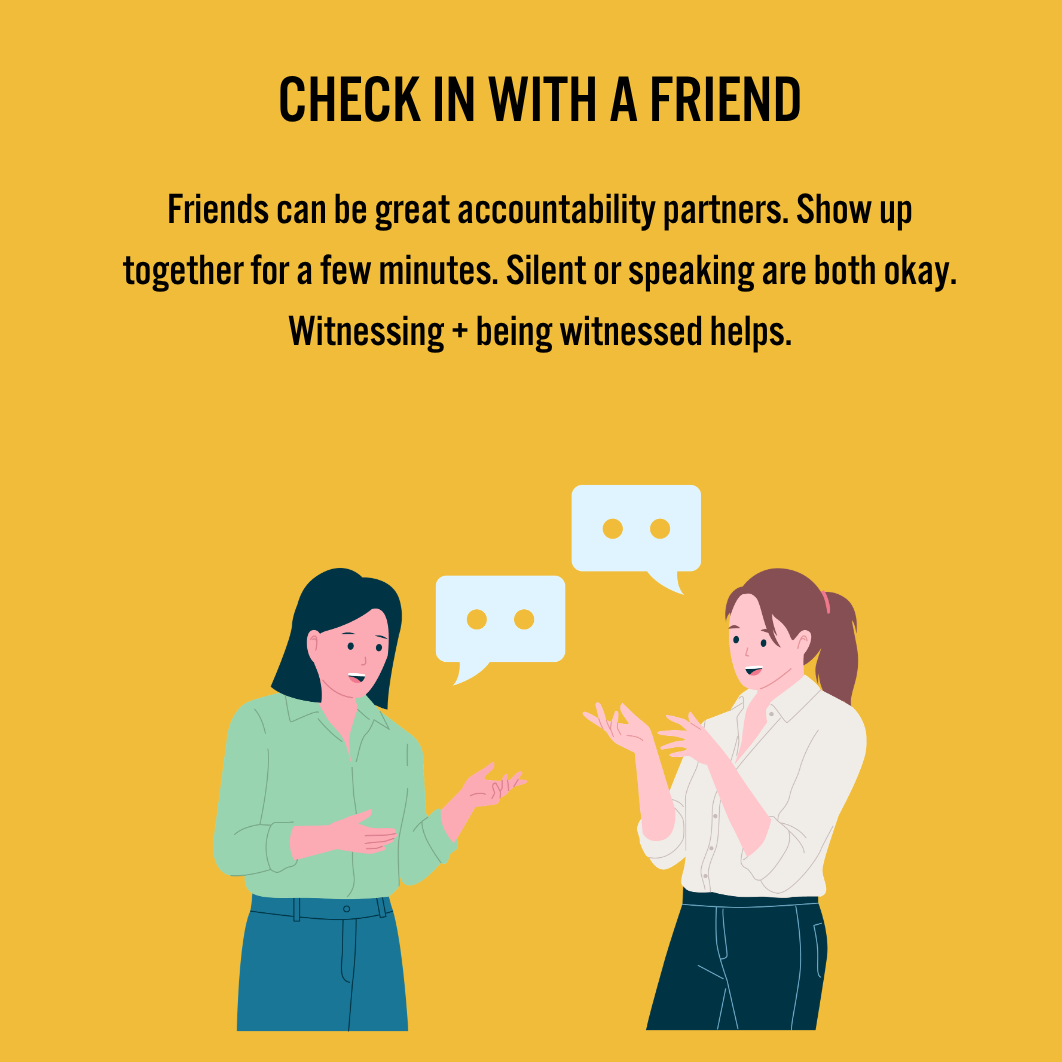
My experiences are uniquely my own, but the larger human experience—the overwhelm, the joy, the confusion—connects us all. Having someone who understands you and is genuinely invested in how you're doing is powerful. When I check in with a trusted friend, even just to say "I'm struggling" or "I'm proud of myself," something settles.
Why it works: Both face-to-face and voice-to-voice conversation with someone you trust stimulates your vagus nerve, which naturally lowers your heart rate and physically relaxes your body. Being vulnerable and witnessed without needing to fix anything or perform is deeply grounding.
Try this: Reach out to someone you trust and just check in. You can talk, or you can even sit in comfortable silence together for a few minutes. The connection is what matters. Perhaps you’ll make it a routine.
5. Explore Breathwork
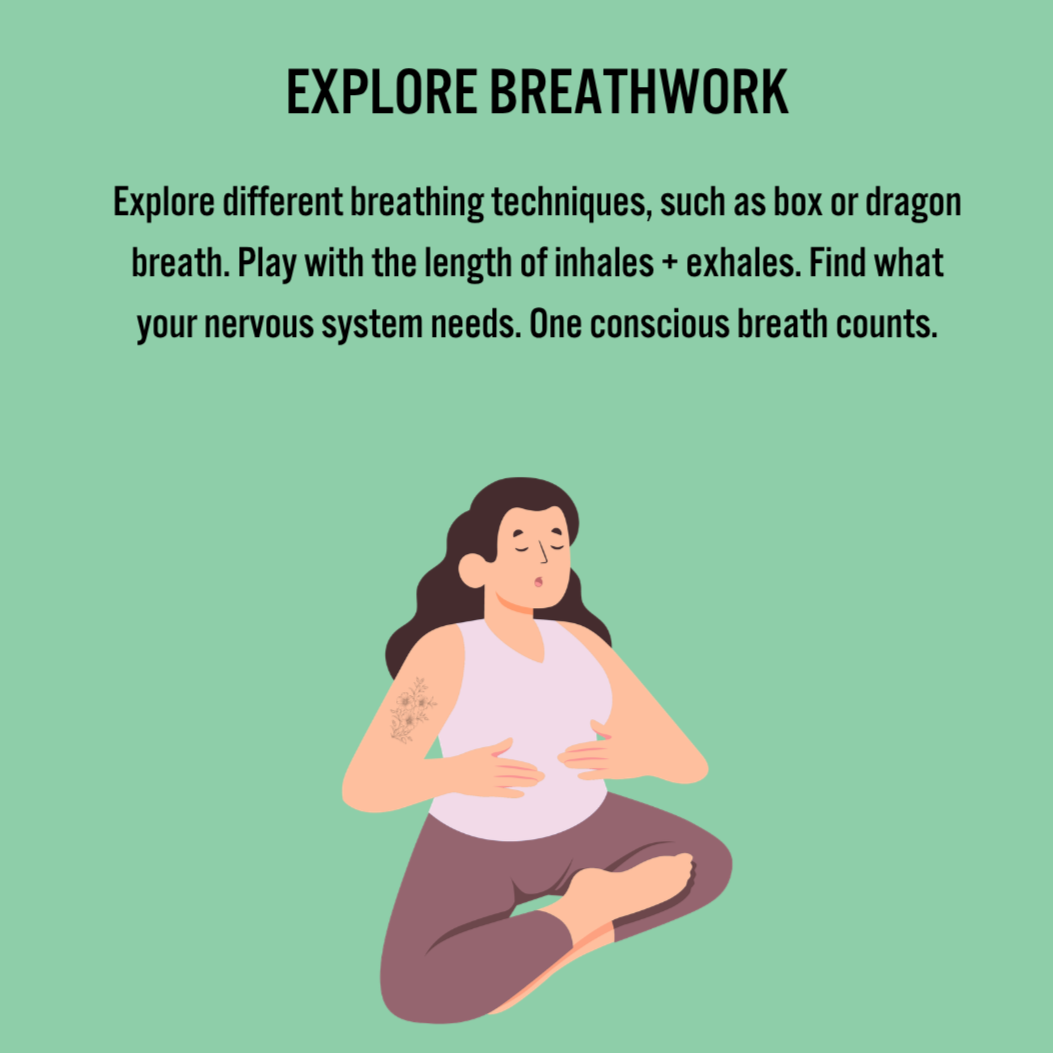
During cancer treatment, I leaned into breathing practices more intentionally than ever before. Guided breathing exercises gave me a way to work through anxiety and stress that felt supportive rather than forcing. Over time, I learned what my nervous system needs when I feel like the world is closing in. Sometimes it’s a quick breath. Sometimes it’s something deeper and slower.
Why it works: Focused breathing redirects anxious thoughts and gives your body a concrete tool to release tension it's been holding. Different techniques work for different moments. Your nervous system knows what it needs; somatic breathing practices help you find it.
Try this: Try one simple breathing technique, like breathing in for 4 counts and out for 4 counts (box breath). Notice how it feels. If something else calls to you, try that instead. There's no "right" way.
Building Your Pause Practice
These five practices work because they don't demand perfection or ideal conditions. You don't need a serene space, an hour of uninterrupted time, or any special setup. Pausing can happen anywhere, anytime, in small moments.
Over time, these small pauses compound. A few seconds of noticing your breath. A quick body scan between tasks. A moment with a friend. When life is full, these practices become the anchors that help you reclaim your energy and move with intention instead of just reacting.
The real practice is recognizing the moments you already have and using these tools when they feel right.
Want to discover pause practices that truly fit your life? These five ideas are just the beginning. I work with clients to create personalized wellness approaches that honor where you are right now—your energy levels, your circumstances, your actual daily life. Let's chat about how to build pause practices that fit your real life.
